4 Ways to Stave Off Stink Bugs

December 9th, 2011

With the onset of the winter, we face the possibility of a stink bug infestation. Utah is home to nine species of stink bugs, and all of them earn their title: stink bugs have a tendency to spray a foul-smelling glandular odor whenever they’re disturbed. So getting rid of these little stinkers can be a little tricky, but it’s possible. Here are four ways to beat the stink:

  1. First, DON’T CRUSH THEM! You can recognize a stink bug by its shield-like shape. If you look closely (but not too closely!) you can usually see that a stink bug’s body is divided up into five sections. A crushed stink bug means the release of that stinky glandular spray. If you crush a stink bug, you’ll have a smelly mess on your hands.
  2. Seal off your house. Make sure there are no cracks in the cement of your foundation. In the winter, replace your outside screens with storm windows and install a storm door. Don’t give the little bugs any place to get inside.
  3. Pull out the vacuum. If you’ve been unfortunate enough to find a stink bug inside the house, suck it right up. But make sure to get the vacuum bag out of the house as soon as possible – if you’d rather the aroma of your home not be described as “stinky,” that is.
  4. Make sure your home is sprayed. Your home should be sprayed periodically for bugs of all kinds. For a Utah pest control company that won’t cut corners, contact Beeline Pest Control.

Three Bug Facts You’ve Always Wondered About

November 11th, 2011

The world of insects may be ugly and creepy, but it’s pretty fascinating, too! Here are three frequently asked bug questions and the answers to them:

  1. Why do moths fly to light? Moths’ movement toward light is known as positive phototaxis. What’s the purpose of phototaxis? The most popular theory has to do with migration: every year, many species of moth fly south for warmer climes, using the moon as their guide to get there and back. They may interpret electric lights as the moon, fly to them and – when they actually arrive – become confused and disoriented.
  2. Why do mosquito bites itch? Mosquitos actually don’t bite at all! They actually use their long, skinny proboscis to break the surface of your skin. Once they find blood, they inject some of their saliva into your skin, which acts as an anti-coagulant, meaning it keeps your blood flowing until the mosquito has drunk her fill. Your body senses the presence of the saliva and releases histamines to combat it. In the process, your blood vessels swell, become irritated, and start to itch.
  3. How do bugs survive in the winter? There are many winter survival techniques, depending on the insect species. Some, such as the monarch butterfly, head south in the winter. Often, insects will fly south in the winter, reproduce, then die, so that the insects who come back home in the spring are totally different than the ones that left in the winter! The favorite bug survival technique, however, is to winter over in unsuspecting humans’ homes. Before people were around, they probably hibernated in hollow logs and other tight spaces. In winter, bugs are most likely to be found in attics, wall voids, and other out-of-the-way places.

If bugs have made your home a winter getaway location, make sure to call the Utah pest control experts.

Four Ways to Keep Pests Out in Winter

October 7th, 2011

Many household pests will happily live in the countryside all summer while food is abundant and the weather is warm outside. However, as winter approaches, food becomes more scarce and the temperatures drop, leaving insects with two choices: either find a nice, warm place to hibernate with lots of food, or die in the snow. Don’t let your home become a winter home for bugs. Take the following steps to prevent a winter pest problem:

  1. Keep food sealed and out of the open. Don’t give insects anything to snack on and they’ll quickly turn away in frustration. Limit the places where you eat, clean up food spills quickly, and vacuum and mop on a regular basis.
  2. Store your firewood outside. Termites aren’t the only creatures who love wood: woodpiles make for a dark, warm hiding place and are the favorite living spaces for cockroaches, mice, and other creatures. Make sure your firewood is far from your house and neatly stacked.
  3. Seal up any cracks. Even small cracks and openings in your walls and foundation can pose a risk. Mice, for example, are flexible enough that they can squeeze through a crack the size of their skulls.
  4. Most importantly, make sure you receive regular pest control treatments from a Utah pest control expert. With just a few minutes every few months, you can significantly reduce your risk of a pest invasion.

2 Questions to Ask When Looking for a Pest-Control Company

August 11th, 2011

Everyone needs a plan for controlling the pests in their home. Without one, your home will quickly become a cozy homestead to hordes of creepy-crawlies that you’d rather keep outside. No one wants that to happen. So you need a company to which to turn to care for your pest control needs. But how do you know that you’ve picked the right Utah pest control company? Here are two important questions to ask:

  1. Are their methods safe? Certain outdated pest-control methods are terrible for the environment and – much worse – for your family. These methods can have adverse effects on your children and your pets. Beeline Pest Control’s policy is always to use the safest and most cutting-edge technologies available and ensure your home is bug-free while keeping your family safe.
  2. Are their employees licensed, bonded, and insured? Mistakes happen all the time. If your home is being serviced by an uninsured technician and they injure themselves, you may have a lawsuit on your hands. The pest-control professionals at Beeline Pest Control are not only licensed to control your pest problem, they’re full insured as well. That means that a visit from Beeline is never a liability.

Any number of factors can affect your choice of pest-control company. But you can always feel safe choosing Beeline pest control, your Utah exterminators.

3 Ways to Keep Fire Ants Out

July 5th, 2011

Of all the different types of common household ants, fire ants are the most dangerous. These ants have a powerful sting that leads to blisters, red skin, and itching. In an allergic reaction, a fire ant’s sting can create difficulty breathing, swelling, and even death! Here are a few things that you can do to keep fire ants out of your house:

  • Keep food out of sight! Ants will enter your home looking for food. If a single ant finds significant amounts of safe food, hundreds will likely follow. That’s because of ants’ special ability to mark a safe food source so that other ants can find it. The other members of their colony will come to carry away your spilled food or exposed pet food and – before you know it – you have an infestation on your hands.
  • Fix any leaks in your plumbing! Ants will also come marching into your home looking for a safe water source. If they find one, you may soon have hundreds of unwelcome house guests!
  • And the most important preventive measure: have your home regularly sprayed for bugs by a pest control professional. If, in spite of your best efforts, you find that you have an infestation on your hands, give a call to your Utah pest control experts and we’ll swiftly dispatch them for you.

How to Keep the Roaches Out

June 8th, 2011

It’s summertime in Utah, and cockroaches are coming out of hibernation and wreaking havoc in homeowners’ lives. It’s important to prevent these masters of survival from ever calling your house home sweets home.

One cockroach alone can spawn fifteen more every week for up to two years! Here are six ways to keep roaches out of your home:

  1. Keep your drains covered. Once inside your home, roaches will find a water source and make themselves to home. If your drains are covered, they’ll have no place to camp out.
  2. Run water through all drains weekly. Your pipes contain P-traps designed to keep bugs out of your home. Water pools in these traps as a barrier. If the traps go dry, they will no longer function properly.
  3. Don’t bring them home! Before bringing boxes in from outside storage, check to make sure they don’t have stowaway roaches inside. Properly seal doors, windows, and air conditioners to eliminate any entry points.
  4. Don’t leave pet food out – roaches will love it just as much as your pets do.
  5. Eliminate potential hiding spots. These include woodpiles, yard trash, and cracks in your exterior walls or foundation.
  6. Have a professional spray your home periodically. As your Utah pest control experts, we at Beeline recommend using a quarterly maintenance program to make sure your home is covered year-round. Beeline’s quarterly maintenance program also provides free, as-needed in-between visits.

Watch Out for Wasps!

April 27th, 2011


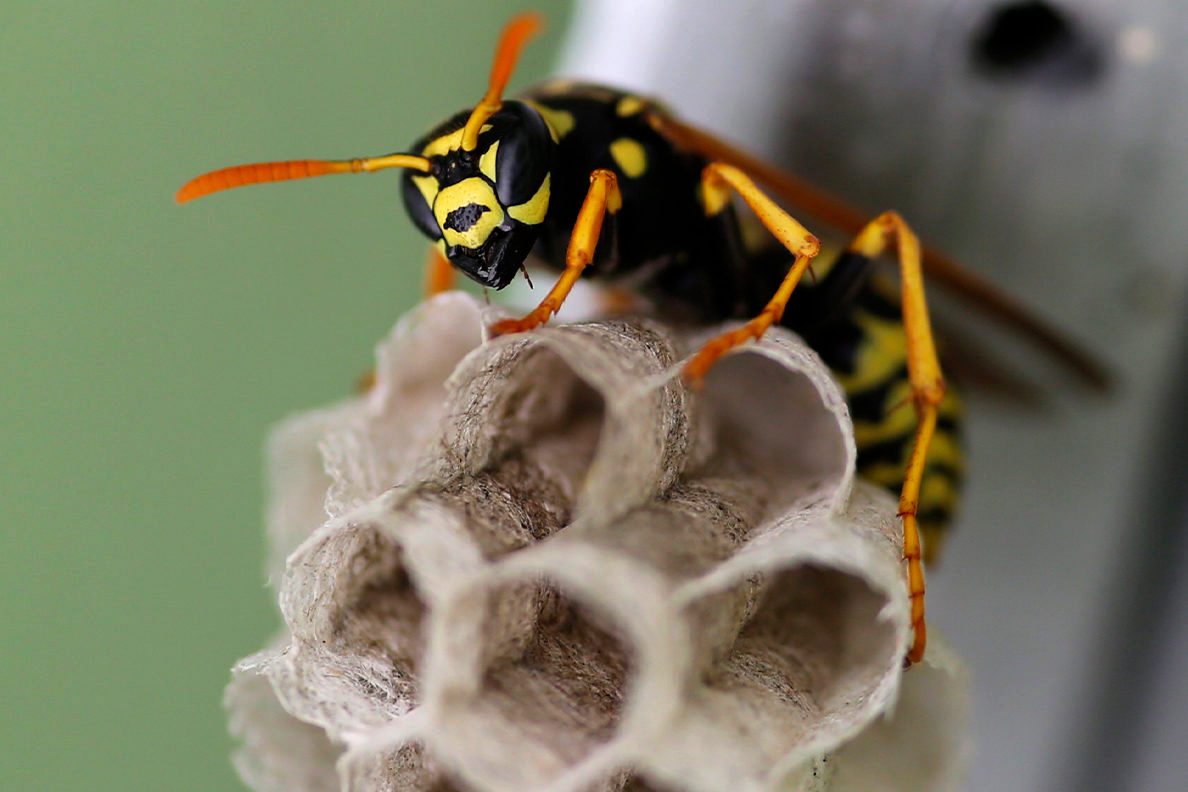
Generally, one wasp sting is not a big deal. Although it does hurt, the discomfort is livable and not life threatening.   However, a full on attack by multiple wasps is where the danger lies. A wasp attack can result in multiple side effects, such as an allergic reaction.

Keep in mind this only happens when their territory is threatened so steer clear of their nest. This is when they become aggressive and strike out.  Typically, if you leave wasps alone, they will leave you alone. In fact, they prefer not to interact with humans at all.

Did you know? Fun facts about wasps:

  • Wasps that feed on ferment can occasionally get drunk and pass out.
  • Some wasps, known as Tarantula wasps, can actually paralyze tarantulas and lay a single egg on the still living spider.  Once the egg hatches the wasp larva has fresh food.The female yellow jacket wasp lays both fertilized and unfertilized eggs.
  • Some wasps, such as the Bald Face Wasp, have smooth stingers, so they can sting over and over again.
  • A wasp nest can include more than 10,000 wasps
  • American can claim more than 4,000 different types of wasps

What to do if a wasp stings you:

First of all, calm down!  Everything is going to be okay.  The protein venom injected by a wasp typically only causes swelling and slight pain for up to 24 hours.  But, it can cause shortness of breath, hives and dizzy spells.   You can eliminate these symptoms by applying extremely cold water or ice to the injection site, drink plenty of water and lie down and relax!

Let the professional team at Beeline Pest Control come in and inspect your wasp problem. We promise to rid your house of these potentially dangerous insects and to make your home safe again.  We are your Utah pest control experts! Call us today!

You Don’t Have to Share Your Home with Ants this Summer

March 29th, 2011

In the springtime, flowers begin to bloom and the warm breeze promises that the days of summer are just around the corner.  It’s a time for playing in the sun and rejoicing in new things to come.

However, springtime is also when ants come out in search of food.  And no matter how clean your home is if it’s in the way ants will just scurry right through it.  If they do happen to find their way into your kitchen, bathrooms, or garage you don’t have to share your space with them!

Here is a quick way to get them to move out for good:

  • Find the colony and treat it. If you attempt to rid your home of these pests by killing only a few scraggly ants you will never solve the problem.  You’ve got to find the colony.  If it’s in the walls it could be a moisture problem, which should be dealt with first so call you’re plumber right away.  If the colony is under a concrete slab it will require special equipment to eliminate.  You’ll want to contact an expert pest control company for assistance on this one. Hopefully, the colony is somewhere easily accessible and easily treatable.

Many people choose to deal with ants throughout the spring and summer, and simply kill them off bit by bit with an over-the-counter pesticide.  This is always an option, but for those of you who’d rather eliminate the problem all together just give us a call. We can rid the unwanted pests right away! After all, we’re your expert Utah pest control company.

Spring and Box Elder Bugs are Upon Us!

February 23rd, 2011

Spring is just around the corner and we couldn’t be more excited! The warmer breeze and blooming flowers are definitely something to celebrate.  Sadly, box elder bugs are celebrating right along with us. They’ve been hibernating in our homes and attics for months now and they also want a chance to enjoy the sunshine and feed on the seeds of maple, oak, box elder and ash trees.

These black and reddish-orange bugs are harmless, but that doesn’t make them less of a nuisance. They’ e infamous for gathering in extremely large groups—we’re talking about several thousand all at once. They also like to chill out on the side of homes and in gardens which puts our plants at risk of being destroyed before you have the chance to enjoy them.

Box elder bugs be gone

The key to avoiding a box elder bug invasion is to give the inside and outside of your home a thorough inspection.  Caulk all window and door cracks and repair any holes in your screens. If you do happen to find a mess of squirmy box elder bugs in your home you can try vacuuming them up. Yes, we said vacuum! This is the quickest and most efficient way to eliminate them.  Just be sure to empty the vacuum bag in an outside trash far away from your home.

For an outdoor invasion you can use almost any insecticide to eliminate them or you can contact us, your reputable Utah pest control company, for termination assistance.  We’ve been dealing with these annoying pests for years and years and can remove them for you in a jiffy!

Cockroach Infestation and Termination

January 28th, 2011

A cockroach invasion is not something to take lightly! These annoying and awful looking pests are hard to get rid of due to their ability to hide out for long periods of time. Here are some quick facts about cockroaches that you may not know:

Cockroach FAQ’s:

  • What size and shape are they? Generally, cockroaches range from 1/8 inch to over 1 inch long.
  • Where do they hang out? Roaches can live in a variety of environments but prefer someplace warm with abundant food and water.
  • How do they spend their time? These creatures are nocturnal and like to stay hidden in dark, moist places such as under furniture, behind appliances, and in cupboards. During the night they come out to feed.
  • What do they eat? Cockroaches prefer sweets and meat. However, they can consume pretty much anything to stay alive, including paper and hair!
  • How do they reproduce? Very rapidly! A female roach lives up to 2 years and produces 1 egg sack a week with each sack containing to 15 eggs.

Roach Infestation and Termination

If you have a roach problem you’ll want to contact us right away! You’ll know if you do if you see brown tiny bodies scurrying about, or white oval sacks in dark corners. If you spot a single cockroach in your house or office you can be sure that there are hundreds, possibly thousands, hiding close by. If you are experiencing a cockroach infestation call us, your Utah Pest Control Company today! We will investigate the seriousness of your pest problem and help you get rid of it.